Today’s economy is largely linear: Manufacture, use, dispose. We make things, using valuable resources. We use those things, and when those things reach their end of life, we simply throw them away.
If you’re one of those people who like to ensure broken or defunct devices are recycled or repurposed, you can be proud that you’re contributing towards a more circular economy. In a circular model, goods are manufactured using recycled or reclaimed materials where possible. These goods are built to be fit for purpose and designed to last. When goods fail, they’re either repaired, upcycled, recycled, or remanufactured to minimise the drain on natural resources.
While a truly circular economy might seem like a dream of the far-flung future, the EU recently announced a goal of 24% circularity by 2030. That’s compared to its current circularity rate of 11.8%. Tech for Good is a key part of how this can be achieved: using available and emerging technologies to promote more responsible use of our planet’s limited resources.
The EU’s Circular Economy Goals Explained
A circularity rate sounds like a tricky thing to measure, but it’s simpler than it sounds. It refers to the percentage of materials used that are either recycled or reused. The EU’s Circular Economy Act lays out the current circularity rate and a goal of doubling it by 2030, which is part of a wider initiative to reach carbon neutrality by 2050.
Key facts from the Circular Economy Act include:
- At least 90% of biodiversity loss is caused by the extraction and processing of resources
- Estimates suggest that by 2050, humans will be consuming resources at three times the sustainable rate
- Around 80% of a product’s environmental impact is determined at design level
While the UK isn’t part of the EU, these statistics highlight that designing better ways to manufacture and maintain everyday items could be an essential key to unlocking a transition to a circular economy.
Tech for Good and How it Can Help
Technology is often seen as a driver of pollution, resource consumption, and other negative environmental factors. But used responsibly, Tech for Good can help power environmentally conscious initiatives that help improve life and reduce the drain on increasingly limited resources.
Examples include:
- Virtual reality and augmented reality can provide immersive views of situations, such as the ability to view pollution levels in an area compared to historical data.
- Digital waste tracking helps authorities understand when corporations are abusing waste policies and hold them accountable.
- Responsibly implemented, AI has a number of potential uses as a technology for good, from tracking environmental changes to predicting natural disasters, and even helping companies order the correct volume of materials to avoid waste.
- Blockchain, while normally associated with cryptocurrencies, can also be used for monitoring supply chains and material usage, and tracking carbon emissions.
New ways to integrate renewable energy sources can also be aided by emerging technologies. The ability to make solar cells smaller and more efficient, for example, could rapidly increase the number of applications they can be used for. In 2025, a Chinese manufacturer designed cells with an unprecedented efficiency of 34.85%. Further advancements to improve the reliability and durability of these panels could see them transforming energy usage in the next few years. Long-lasting, renewable energy sources are an essential part of a circular economy.
Become Part of the Change
You can help get the next generation excited about the possibilities of a circular economy. Look out for local repair cafes, where people meet up and bring broken toys, kettles, computers, and more to share skills and help each other fix items. It saves money and keeps goods out of landfill sites, and reduces the strain on resources.
Make small changes in how you buy and waste products. Single-use items may be necessary in some cases, such as medical settings or for accessibility, but where possible, invest in items that are designed to last. Recycle where you can, and look for opportunities to re-use or repurpose goods. Even using items for crafting with the kids is better than them ending up in the rubbish bin.
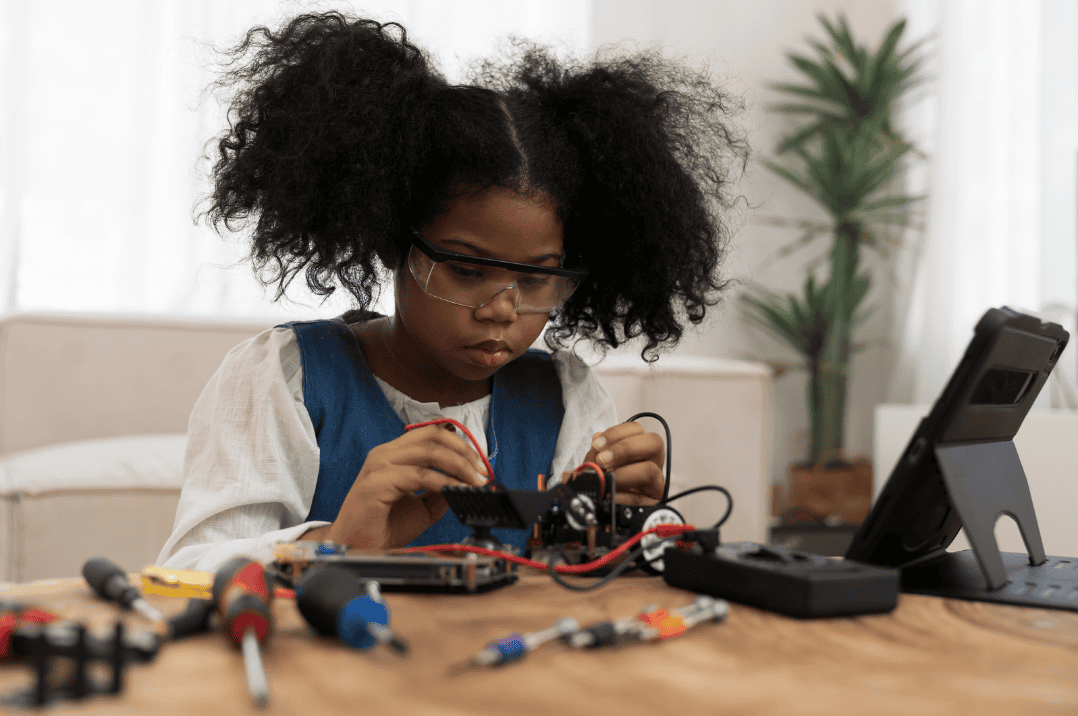
Peer-to-peer Tech & Engineering and STEM education groups help youngsters learn about different ways to create things for themselves. They may go on to be a home-based maker, or even take their skills into the vocational world, becoming a skilled engineer or technologist with ideas on how to improve the way everyday items are built.
With four-fifths of a product’s environmental impact determined by its design, the younger kids start learning about making and innovating, the more chance they have of being the changemakers of the future.
Girls Into Coding is a tech education initiative, holding events and bootcamps where girls ages 10-14 collaborate on exciting tech and engineering projects. We explore multiple topics connected to Tech for Good and the possibilities of a circular economy, including AgriTech, recycling, and smart city-related Tech & Engineering projects like the award-winning Air-Quality Pop-Up Pavilion. Find out how we’re transforming the girls in tech of today into the women in STEM of tomorrow.